


BISON Santy
Hello, I am Santy, the funder of bisonclean.com. I have been in cleaning machinery field for more than 5 years now, and the purpose of this article is to share with you the knowledge related to pressure washer from a Chinese supplier's perspective.
Table of Contents
Hot water pressure washers are powerful cleaning machines designed to tackle tough grease, stubborn grime, and ensure effective sanitation. The heat in the water plays a crucial role, breaking down oils and dirt more quickly and deeply than cold water alone, making these washers ideal for heavy-duty cleaning in industries like food processing, automotive, and agriculture. To generate this heat, they rely on fuel to warm the water before blasting away contaminants.
Unlike cold water models that depend on water pressure and detergent, hot water pressure washers include a heating system with temperature control. This allows the water to reach the ideal temperature to dissolve grease and oil efficiently while killing bacteria and viruses.
This blog will explore the main types of fuel used in hot water pressure washers, outlining their advantages and disadvantages to help you choose the best fuel.

Understanding hot water pressure washer fuel systems
A hot water pressure washer operates through a dual system that combines high-pressure water delivery with heated water output. The process begins with the pump creating a strong water flow, which is then directed through a heating coil or heat exchanger, where it is rapidly heated before being released through the spray nozzle. This heated water significantly enhances cleaning effectiveness by breaking down grease, oil, and stubborn contaminants that cold water alone cannot efficiently remove.
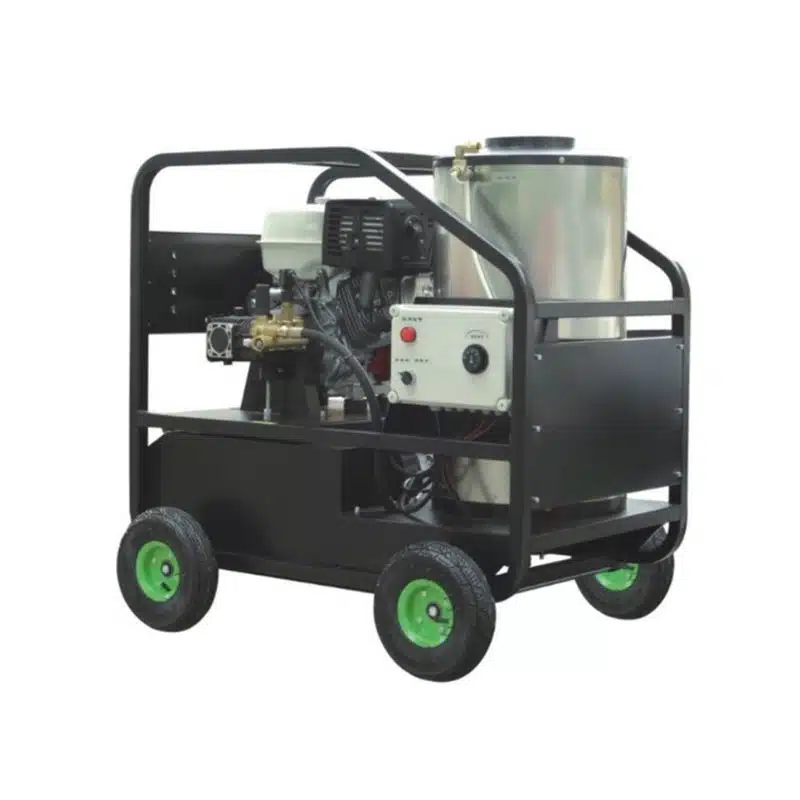
Hot water pressure washers are built with key components, including a high-pressure plunger pump, an unloader valve for pressure control, tubing, constrictor nozzles, and a heating source. The pump generates the water flow, while the heater uses a separate energy source to raise the water temperature. Combustion of fuels such as natural gas, propane, kerosene, or diesel inside a fuel-fired burner—or electricity in electric models—heats a coil within the heating chamber.
For fuel-fired systems, the coil is exposed to a direct flame, while in electric systems, the coil or tank is heated by electric elements. Water typically enters the pressure washer from a hose or tank, passes through the high-pressure pump, and circulates through a heating coil made of durable steel tubing. As the water flows through this coil, its temperature can reach up to 200°f before being discharged through the nozzle.
Engine/motor fuel vs. burner fuel
In hot water pressure washers, fuel serves two purposes. It powers the mechanical components that generate pressure and provides the energy needed to heat the water.
- Engine/motor fuel system: This system powers the pump assembly responsible for generating water pressure. Depending on the model, it can operate on gasoline, diesel, or electricity.
- Burner fuel system: This system heats the water as it passes through the heating coil. Common burner fuels include diesel, kerosene, and propane, each chosen based on efficiency, cost, and availability.
Common fuel types for hot water pressure washers
- Diesel: Diesel is the preferred fuel for heavy-duty commercial and industrial pressure washers due to its high energy output, durability, and fuel efficiency. It is the most common choice for mobile units thanks to its safety, availability, and strong heat generation. But it produces more emissions, operates noisier than other fuels, and requires specialized service for fuel systems and emissions controls.
- Gasoline: Gasoline pressure washers are common in portable applications, offering a strong power-to-weight ratio and easy fuel access. It has a lower purchase cost and a more economical initial investment, and is easy to start in low temperatures.
- Electric heating elements: Electric pressure washers use electricity instead of fuel combustion to heat water, making them ideal for stationary or indoor use.It operates at less than 70 decibels and has no fuel leaks or odors. It should be noted that its heating speed is slower, and electricity costs may be higher for large-scale operations.

Factors to consider when choosing your fuel
1. Frequency of use
Home and light use (less than 10 hours per week): For occasional cleaning of driveways, patios, or small projects, gasoline-powered units are practical and affordable.
Commercial and heavy use (more than 20 hours per week): For contractors, industrial facilities, or frequent cleaning jobs, diesel-powered washers offer the best combination of power, fuel efficiency, and durability.
2. Portability vs. Stationary use
If you move between job sites, gasoline and diesel units provide the mobility and flexibility needed. Gasoline engines are lighter, while diesel engines deliver more torque for demanding work.
For fixed installations such as car washes, factories, or cleaning stations, electric units are ideal. They connect to existing utilities, require no fuel storage, and offer quiet, cost-effective operation.
3. Indoor vs. Outdoor use
For indoor cleaning or enclosed spaces, electric pressure washers are the safest choice since they produce zero emissions and minimal noise.
For outdoor use, all fuel types—diesel, gasoline, or electric—are suitable.
4. Budget
- Upfront costs: Gasoline models are the least expensive, followed by diesel, then electric. Propane systems are usually the most expensive initially.
- Operating costs: Diesel offers the best long-term fuel efficiency, while electric can be economical where power rates are low. Gasoline consumes more fuel, increasing long-term costs.
- Long-term value: Diesel units last longer and retain better resale value. Gasoline systems are cheaper to repair but require more frequent maintenance. Electric washers have fewer moving parts but may need costly electrical upgrades.
5. Environmental impact
If emissions or noise are concerns, electric systems are the cleanest and quietest options. If you are using it near a residence, hospital, or environmentally sensitive area, an electric pressure washer is the most suitable.
6. Maintenance requirements
- Gasoline engines are easy to service and use widely available parts.
- Diesel systems need less frequent maintenance but require specialized service.
- Electric pressure washers require very little maintenance, but if electrical problems occur, a qualified electrician is required.
7. Local fuel availability and regulations
Always choose a fuel type that’s readily available in your area. In remote locations or emergencies, availability can limit your options. Check local safety and storage regulations to ensure compliance.
Conclusion
Choosing the best fuel for your hot water pressure washer depends on your cleaning demands. By weighing factors such as performance needs, fuel availability, maintenance requirements, and environmental impact, you can select the most practical and cost-effective option for your situation.
After making your decision, you can contact BISON to import reliable and durable pressure washers from China. As a leading pressure washer manufacturer in China, BISON provides the most comprehensive service processes and professional technicians to ensure you enjoy the most meticulous service experience. No need to worry about anything going wrong – from diesel and gasoline pressure washers to electric pressure washer series, every machine undergoes rigorous testing, and every component has professional technical support.
FAQs about What the best for hot water pressure washer
It depends on what you’re cleaning. Cold water pressure washers are great for removing general dirt, mud, or sand over large areas, especially when used with detergent. However, hot water pressure washers excel at tackling grease, oil, and grime by heating the water to “melt” away stubborn buildup — just like washing greasy dishes with hot water.
If you’re cleaning engines, auto parts, machinery, or any surface contaminated with oil or grease, a hot water pressure washer is the better choice. For lighter jobs like cleaning siding, decks, or mud-caked surfaces, cold water models are often sufficient.
Yes, they generally cost more due to the additional components needed to heat water under pressure, such as the burner assembly and heating coil. They also require more regular maintenance, with annual servicing recommended for the burner and safety systems.
However, hot water models quickly pay for themselves through efficiency and reduced labor time. They clean faster, require less detergent, and handle tough grime more effectively — making them a smart long-term investment for frequent or professional use.
You might also enjoy


Questions?
Contact Us Today.
Related Products



Find more?
Related Posts

Hot water vs cold water pressure washers
The purpose of this article is to compare the differences between hot and cold water pressure washers and to highlight the pros and cons of