
BISON Santy
Hello, I am Santy, the funder of bisonclean.com. I have been in cleaning machinery field for more than 5 years now, and the purpose of this article is to share with you the knowledge related to pressure washer from a Chinese supplier's perspective.
Table of Contents
A pressure washer is a powerful cleaning tool designed to remove dirt, grime, grease, mold, and tough stains from various surfaces using high-pressure water. It’s widely used for cleaning decks, cars, outdoor furniture, driveways, walls, siding, fences, and even heavy machinery. In these situations, using a pressure washer is a faster, easier, and more effective way to clean.
They use advanced technology to boost water pressure, delivering a powerful jet. One of their greatest advantages is the ability to cover large areas in a fraction of the time, saving not only effort but also water and cleaning detergents. So, how does a pressure washer work?
At the core of every pressure washer are a few key components: the motor (electric or gas-powered), the pump (which increases water pressure), and the nozzle (which controls flow and intensity). In this article, we’ll explain how all of these components work together and discuss how a pressure washer works.
Understanding the basic components of a pressure washer
- Motor/engine: The motor or engine powers the pump, making pressure washing possible. Electric motors are quieter, low-maintenance, and great for light residential cleaning, like cars and patios. Gas engines provide more power for heavy-duty jobs such as cleaning large areas or removing tough stains, while diesel engines are typically used for commercial-grade machines due to their efficiency and durability.
- Pump: The pump boosts water pressure, drawing water from the supply and forcing it through the system. Axial pumps are common in light-duty models, while triplex pumps are more durable and built for heavy commercial or industrial use.
- Water intake: This is where the washer connects to the water source, usually via a garden hose. Many models include filters to keep debris out, which should be cleaned regularly to protect the pump.
- Hoses: The high-pressure hose carries pressurized water from the pump to the spray wand, while the supply hose connects the washer to the water source. Regular inspections help prevent leaks or reduced performance.
- Nozzle: Attached to the spray wand, the nozzle controls water flow, spray pattern, and pressure, allowing you to switch between a concentrated jet or a wider spray depending on the task. Each nozzle features a distinct spray pattern and is available in various sizes and shapes. For details, please see: “BISON pressure washer nozzles“
- Water supply: The supply must have enough pressure to be effectively pumped through the system. Insufficient water flow can reduce performance and damage the pump.
Pressure washer process and working principle
1. Intake: water source and collection
The process begins with drawing water from an external source, such as a faucet, tank, or container. The system ensures a steady water supply for uninterrupted cleaning, and proper filtration at this stage prevents impurities and debris from entering the machine. Water flows through an intake valve—often connected to a garden hose—into the high-pressure pump, which is responsible for creating the force needed for cleaning.
2. Powering the pump: energy conversion
The pump is powered by either an electric motor or a gas engine.
- Electric motor: In electric pressure washers, the motor converts electrical energy into mechanical energy, rotating internal components that drive the pump and move water through the system.
- Gas engine: In gas-powered models, an internal combustion engine runs the pump, providing the energy needed to generate high water pressure.
3. Pressurization: how the pump creates high pressure
Once inside the pump, the water is compressed to create the high-pressure force essential for cleaning. The pump works by forcing water through smaller spaces, increasing both its pressure and velocity.
Think of it like squeezing a partially filled balloon—the tighter the space, the greater the pressure. Similarly, the pump pushes water through a series of chambers using pistons or plungers, compressing it and creating a powerful, high-pressure stream.
4. Delivery: moving water through the hose
After pressurization, the water travels through a reinforced high-pressure hose built to handle intense force without leaks or bursts. These hoses, often made from rubber or nylon with protective layers, provide durability and flexibility for easy maneuvering. At the hose’s end is the nozzle, which shapes and controls the water spray. Narrow nozzles create a concentrated, powerful jet for stubborn grime, while wider nozzles provide a gentler spray for lighter cleaning tasks.
5. Cleaning action: the science behind pressure washing
The cleaning power of pressure washing lies in the kinetic energy of high-pressure water. When it strikes a surface, it dislodges dirt, grease, and other contaminants. For stubborn grime, chemical detergents may be added, breaking down debris before being washed away. Adjustable pressure settings allow the washer to be used on different surfaces safely and effectively.
Its performance depends on two key factors:
- PSI (pounds per square inch): Indicates the water’s force, making it effective at loosening dirt.
- GPM (gallons per minute): Refers to water flow, determining how quickly debris is rinsed away.
Together, PSI and GPM define a pressure washer’s cleaning power. For example, a high-PSI but low-GPM unit removes tough stains but cleans large areas more slowly than one with both high PSI and GPM
Types of pressure washers
1. Electric pressure washers
Electric pressure washers are ideal for light-duty cleaning tasks like washing cars, decks, fences, and patio furniture. They are quiet, lightweight, easy to maintain, and environmentally friendly since they don’t produce fumes. However, they typically deliver lower pressure (around 1,300–2,000 PSI), making them less effective for heavy-duty cleaning like stripping paint or removing stubborn grime. They also require access to a power outlet, which can limit mobility.
2. Gas-powered pressure washers
Gas-powered pressure washers are built for more demanding cleaning jobs, such as cleaning concrete, large driveways, or industrial surfaces. They provide higher pressure (2,500–4,000 PSI) and greater portability since they don’t rely on electrical outlets. On the downside, they are noisier, require more frequent maintenance, and produce exhaust fumes, making them less suitable for enclosed spaces or environmentally sensitive areas.
3. Specialized pressure washers
For specific cleaning needs, there are specialized models available.
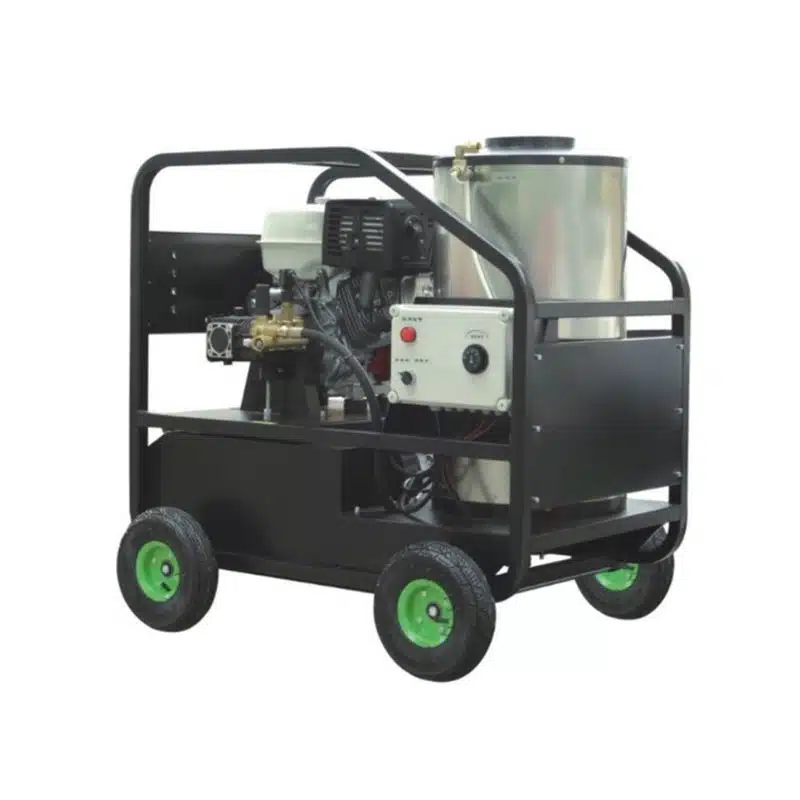
- Hot water pressure washers use heated water to break down grease, oil, and stubborn dirt, making them a top choice for industrial cleaning.
- Battery-powered pressure washers offer cordless convenience for small or remote tasks, though they sacrifice power for portability.
- Heavy-duty industrial pressure washers are designed for professional use, featuring extremely high pressure and durability for intensive cleaning applications.
Safety precautions when using a pressure washer
Always wear protective gear such as safety goggles to shield your eyes from debris and ear protection, especially when using noisy gas-powered models. Sturdy, non-slip footwear is crucial to prevent slips and protect your feet from potential hazards. Never point the nozzle at yourself, others, or pets, and begin cleaning at a lower pressure setting to maintain control. For electric models, keep cords dry, use outdoor-rated extension cords, and regularly inspect them for damage to avoid electrocution risks.
Additionally, test the washer on an inconspicuous area before cleaning delicate surfaces to avoid unintentional damage, and always maintain a safe distance between the nozzle and the surface. Operate pressure washers outdoors in well-ventilated spaces, particularly gas-powered models, to prevent carbon monoxide buildup. Never leave the washer unattended while running, and store it properly after use to keep it in good condition.
Conclusion
A pressure washer is an efficient and versatile tool that can quickly and efficiently complete time-consuming cleaning tasks. However, with great power comes responsibility for safe and proper use. Understanding how a pressure washer works will not only help you understand the device’s important components and operation, but also help you better understand how to use it effectively.
Are you a dealer looking for a cost-effective pressure washer? Explore BISON’s wide range of high-quality models designed for every cleaning application. With our professional services and reliable products, dealers can easily import BISON pressure washers from China. Contact us today, as a pressure washer manufacturer with many years of experience, BISON has the ability to make your sales higher and easier than ever before!
FAQs about pressure washer
Yes, but use caution. Stick to 1,200–1,500 PSI with a 25° or 40° nozzle and keep at least 12 inches from the surface.
You can use specialty pressure washer detergents designed to remove specific tasks, such as grease, mold, or mildew. Because harsh chemicals can damage delicate materials, always follow the manufacturer’s instructions for adding and mixing the cleaner.
Yes, pressure washers can remove paint, especially when using concentrated spray at close range. However, exercise caution when using a pressure washer. Use a 0° nozzle at reduced PSI to avoid damaging the underlying surface.
You might also enjoy
Questions?
Contact Us Today.
Related Products
Find more?
Related Posts
Why won’t my pressure washer stay running?
Why your pressure washer won’t stay running — find expert troubleshooting steps and maintenance solutions to restore reliable operation fast in this guide.
How to descale a pressure washer
This guide walks you through how to descale a pressure washer, from identifying scale buildup and choosing a solution to performing a full system flush.
Types of industrial cleaning equipment
Discover the essential types of industrial cleaning equipment for heavy-duty tasks and explore the best machines.
The different types of floor cleaning machines
we will explore the different types of floor cleaning machines, their features, advantages, and ideal applications to help you keep floors cleaner