
BISON Santy
Hello, I am Santy, the funder of bisonclean.com. I have been in cleaning machinery field for more than 5 years now, and the purpose of this article is to share with you the knowledge related to pressure washer from a Chinese supplier's perspective.
Table of Contents
Pressure washing windows is an excellent way to achieve sparkling clean glass surfaces quickly and efficiently. Unlike traditional hand washing, pressure washers provide the power needed to remove dirt, grime, and buildup that often stick to windows, making the process faster and more effective.
With the right tools and techniques, you can clean glass and frames thoroughly without excessive scrubbing or harsh chemical cleaners. The water pressure loosens and washes away even stubborn stains, offering a safer, quicker, and more efficient method of window cleaning.
However, improper use can cause issues such as broken seals, cracked glass, or water damage inside the home. That’s why it’s important to follow the correct procedure and use suitable equipment to ensure safe and successful results. This blog will guide you through everything you need to know about how to pressure wash your windows, from preparation to post-cleaning care.
Preparing and setting up your equipment
Inspect the windows
Carefully inspect windows for cracks, chips, or loose seals, as water pressure can exacerbate existing damage. Repairing or sealing these areas beforehand helps prevent leaks and protects the window structure.
Prepare the surroundings.
Move outdoor furniture, plants, or decorative items away from the work area, and cover nearby greenery, electrical outlets, and light fixtures with tarps or plastic sheeting to shield them from overspray or detergent.
Choosing the right pressure washer
Select a pressure washer with adjustable settings and aim for a safe psi between 1,200–2,000 to avoid damaging the glass.
- Electric pressure washers are lightweight, quiet, and suitable for smaller residential jobs.
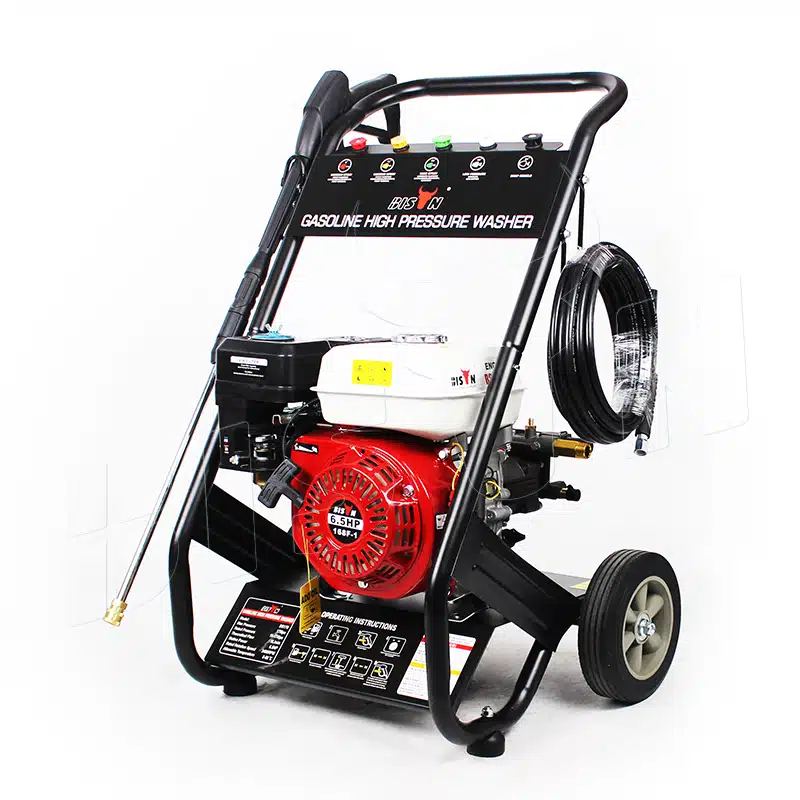
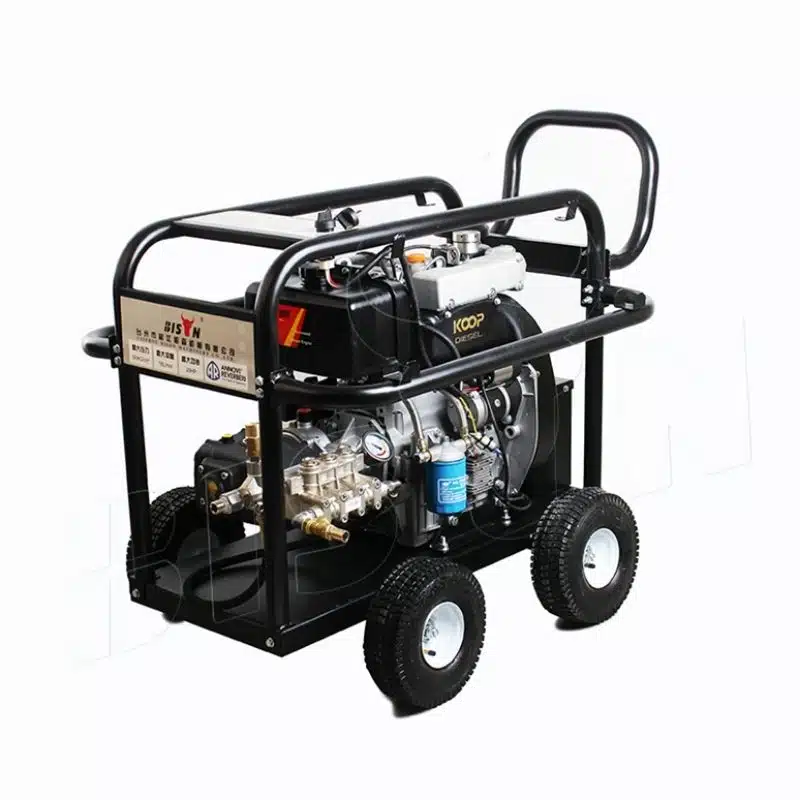
- Diesel and gasoline pressure washers provide more power, making them better for large homes or commercial buildings.
Nozzles
- 40-degree nozzle: best for general window cleaning with a gentle, wide spray.
- 25-degree nozzle: useful for tougher grime on frames or sills.
- Soap nozzle: designed for applying detergent evenly across surfaces.
Cleaner solutions
For better results, consider using a window-safe detergent. Pre-soak using a BISON foam cannon or through the detergent tank of a pressure washer to loosen dirt and make rinsing easier. Many BISON pressure washers feature a built-in tank for quick and efficient detergent application.
How to pressure wash windows safely: step-by-step
Step 1. Pre-rinse the windows
Begin with a low-pressure setting and a 40-degree wide-angle nozzle to gently wet the glass and frames. This loosens dirt, cobwebs, and debris while preparing the surface for detergent. Always work from top to bottom to let water run down naturally and reduce streaks.
Step 2. Apply detergent
For heavily soiled windows, use a window-safe detergent. Switch the washer to soap mode (or use a foam cannon) and apply detergent evenly, keeping the nozzle at least 12 inches away from the glass. Start at the top and move downward. Let the cleaner sit for 3-5 minutes to break down the dirt, but don’t let it dry on the surface. This will make cleaning easier later.
Step 3. Wash with steady motions
Switch back to clean water and set the washer between 1,200–2,000 psi with a wide-angle nozzle. Always begin with a lower setting and work upward only if needed. Avoid using high-pressure settings above 3,000 psi, which can damage glass and seals.
Hold the wand 12–18 inches from the glass and wash using smooth, overlapping strokes. Avoid spraying directly at window edges, seals, or corners to prevent leaks or damage. Also, be careful not to hold the nozzle in one position for too long, as this can damage the glass or surrounding seals.
Step 4. Final rinse
Rinse the windows thoroughly with clean water, starting at the top and working downward. Make sure all soap and residue are removed to prevent streaks and leave your windows clear and sparkling.
Post-washing care for windows
Begin by inspecting the glass, frames, and seals for any cracks, loosened caulking, or other damage, and address issues promptly to prevent further problems.
For a streak-free finish, remove excess water with a squeegee, starting at the top and pulling straight down in even strokes. Wipe the edges and corners with a clean microfiber cloth to eliminate any remaining moisture or water spots.
Finally, clean the area, remove any protective covers on plants, outlets, and fixtures, and replace any furniture or decorative items.
Benefits of pressure washing windows
- Efficient and time-saving: Pressure washing cleans large window areas much faster than manual methods. The powerful water stream covers more surface in less time, making it especially useful for multi-story homes and buildings where cleaning is often more difficult and time-consuming.
- Thorough cleaning: The high-pressure spray removes dirt, grime, bird droppings, pollen, mold, and algae that stick to windows, even in hard-to-reach spots. It eliminates debris that would otherwise require heavy scrubbing, providing a deeper clean than traditional techniques.
- Restores window clarity: Over time, buildup can make windows look cloudy or dull. Pressure washing restores sparkling clarity, removing stubborn residue and improving the overall appearance of your property.
- Prevents long-term damage: Grime, algae, and buildup can gradually damage glass and frames. Regular pressure washing helps preserve window materials, extend their lifespan, and prevent costly repairs or replacements.
- Eco-friendly option: With the right biodegradable detergents, pressure washing is environmentally safe. It reduces the need for harsh chemicals while still delivering excellent results, making it a greener cleaning choice.
Troubleshooting common problems after pressure washing windows
Even with proper technique, a few issues can occur. Here’s how to resolve them:
- Streaks: Streaks are usually caused by dirty water running down the glass or by detergent drying too quickly. To fix this, re-rinse with clean water and dry using a squeegee or microfiber cloth. To prevent streaks, wash windows on a cloudy day or late afternoon when sunlight won’t dry the solution too fast.
- Water spots: Hard water can leave mineral deposits that show up as spots. Prevent this by rinsing thoroughly with soft water and drying the glass immediately. For stubborn spots, gently wipe with a vinegar-and-water solution.
- Damaged caulking or leaks: If you notice loose seals, cracks, or leaks after washing, avoid using the window until repairs are made. Contact a professional to reseal and restore weatherproof protection.
Conclusion
Pressure washing your windows is a reliable way to get streak-free, sparkling glass. When done correctly, pressure washing makes window cleaning faster, more effective, and safer compared to traditional methods. By carefully following the preparation, washing, and post-care steps outlined in this article, you can achieve excellent results without risking damage.
As a professional pressure washer manufacturer in China, BISON not only provides high-quality pressure washers but also ensures cost-effective solutions, factory-direct pricing, and complete support services. Our equipment is built for durability, efficiency, and consistent performance, making it an excellent choice for cleaning businesses and professional use.
For distributors looking to expand their product line, importing BISON pressure washers from China offers a smart investment with competitive advantages. Start a business relationship with us today and experience the difference that professional-grade, affordable, and reliable pressure washing equipment can make for your customers.
FAQs about pressure washing windows
Yes. By using an extension wand with your pressure washer, you can safely reach windows up to 20 feet high from the ground. This reduces the risk of falls and makes cleaning second-story windows much safer. If that’s what you need, check out “BISON extension wands.“
Most windows should be cleaned once or twice a year to maintain clarity and prevent buildup. However, if you live in an area with heavy pollen, dust, or pollution, you may need to wash them more frequently.
No. Pressure washing in freezing conditions can cause water to turn into ice, making the area slippery and increasing the risk of accidents. It can also crack glass or damage frames. Always wait for mild, above-freezing weather before pressure washing windows.
You might also enjoy
Questions?
Contact Us Today.
Related Products
Find more?
Related Posts
How to adjust pressure on a pressure washer
By understanding the correct techniques and adjustments in this article, users can optimize their cleaning process for optimal results and safety.
How to pressure wash a patio
By following this guide, you will learn how to execute and complete the pressure washing process efficiently and safely, ensuring that your patio looks its
Types of industrial cleaning equipment
Discover the essential types of industrial cleaning equipment for heavy-duty tasks and explore the best machines.
How to remove graffiti with a pressure washer
BISON will cover the steps to effectively remove graffiti using a pressure washer, from types of graffiti, tool preparation to cleaning maintenance